Join Us for a Joyous Upanayanam Celebration!
Be part of this beautiful tradition as we celebrate our son’s thread ceremony. Your presence will make this event even more special for our family.
We look forward to sharing this memorable day with you and creating lasting memories together.
Ceremony Overview
Upanayanam or the sacred thread ceremony, is a rite of passage that transitions a boy from childhood to the disciplined life of a student, preparing him for formal education and spiritual growth.
Significance
It is one of the Shodasha Samskaras (sixteen rites of passage) in Hinduism and is seen as opening the path to higher knowledge and a deeper understanding of one’s heritage.
Rituals Involved
The sacred thread signifies purity, responsibility, and the wearer’s commitment to their parents, their guru, and society. The ceremony involves the father whispering the Gayatri Mantra to the boy, who is then traditionally considered “twice-born” (Dvijá).
The Ceremonies
The upanayanam ceremony includes a Naandi ceremony which will take place on 13th Dec. 2025. The event will commence at 10:30 AM and will be followed by lunch. The Upanayanam or sacred thread ceremony will be conducted on 14th Dec. 2025. The Muhurtham will be between 9:30 and 10:30AM and will be followed by lunch. We encourage all guests to arrive early to witness the rituals and partake in the festivities. Dress code is traditional attire to honour the occasion and our culture.
The main event, spanning a muhurtham (auspicious hour), is a symphony of chants, symbols, and symbolism. Held in the mandapam with Vedic Brahmins chanting, it’s performed in an intimate, reverent atmosphere. Here’s a step-by-step glimpse into the key rituals:
1. Punyahavachanam and Yagnopaveethadharanam
The ceremony opens with Punyaha Vachanam (purification prayers). The highlight: Yagnopaveethadharanam, where the father invests the yagnopaveeta—a triple cotton thread symbolizing the three Vedas (Rig, Yajur, Sama). Draped over the left shoulder, it signifies purity and the boy’s vow to Brahmacharya.
2. Vapanam (Head Shaving) and Procession
The boy’s head is shaved (vapanam)—locks first snipped by the father, then by a barber—symbolizing renunciation of ego. Bathed in the nearby stream, he’s clad in fresh veshti. A joyous procession ensues: carried by his maternal uncle to the local temple, with aarti en route. Relatives offer jaggery or bananas; in return, murukku and laddu packets are distributed.
3. Agnimukham and Symbolic Adornments
Back home, Agnimukham has the boy stand on a stone for unshakeable strength. The father ties: A waist cloth (kuttai) for longevity and vitality (worn three days). Moujibandhanam (durva grass cord) against evils, representing the Vedas. Krishnajinam (deer skin) for intellect and prosperity. He’s handed a palasha danda (sacred staff) as his Brahmachari emblem.
4. Brahmopadesam: The Heart of the Ritual
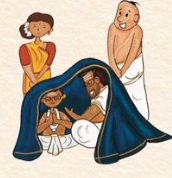
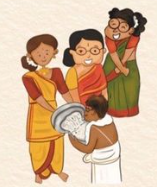
In hushed tones, the father (as guru) imparts the Gayatri Mantra, unveiling Brahman‘s secrets. The boy vows to chant it daily, embracing rules like alms-begging (bhikshatanam) from mother and kin—a nod to ancient Gurukul life.
5. Kumarabhojanam and Homa
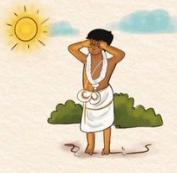
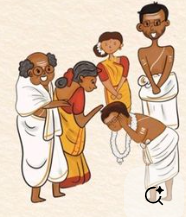
The boy shares a saltless, spiced meal (kumarabhojanam) with another Brahmachari—rice, ghee, milk—for simplicity. Ganapathi Homam and ashirvadam (blessings) conclude, with the boy gazing at the sun (Surya Darshanam) for enlightenment.
The entire sequence, per Aapasthambha Sutras, molds a tireless, ego-free scholar.